
Web hosting is a vital element of any developer’s workflow, particularly in 2025 when speed, scalability, and security are paramount. The best hosting services serve more than uptime, they offer Git integration, staging environments, SSH access, and tooling for modern frameworks.
To help find the right service for you, we’ve compiled the 10 best web hosting services for developers from WPX Hosting to full-stack services like Render, Vercel, and Digital Ocean.
Key criteria for developer-friendly hosting
According to projections, the size of the global web hosting market could reach $355.81 billion by 2029, with demand for fast, secure, and developer-friendly solutions on the rise. When choosing a provider, developers should check for the following criteria:
- Git Integration: it allows for easy version control and automated deployment,
- Staging Environments: they allow you to test updates and new features safely before going live,
- SSH Access: provides direct control of the server for someone to configure, manage, etc.
- High performance & low latency: providing you with fast load time and a great user experience,
- Security: such as SSL certificates, malware scanning, and DDoS protection,
- Automatic Backups: protect your data, and allow you to fix errors easily, regardless if they are attacks or your team making mistakes.
- Scalability Options: traffic can spike at any moment, you want to be prepared for that, and future growth.
Opposite view:
While people think features such as git integration, staging, and scalability are necessary, they are not actually necessary for every developer. Smaller projects or personal websites, a cheap hosting plan with basic uptime and security may be more than enough.
Best Web Hosting for Developers
1. WPX
Source: WPX
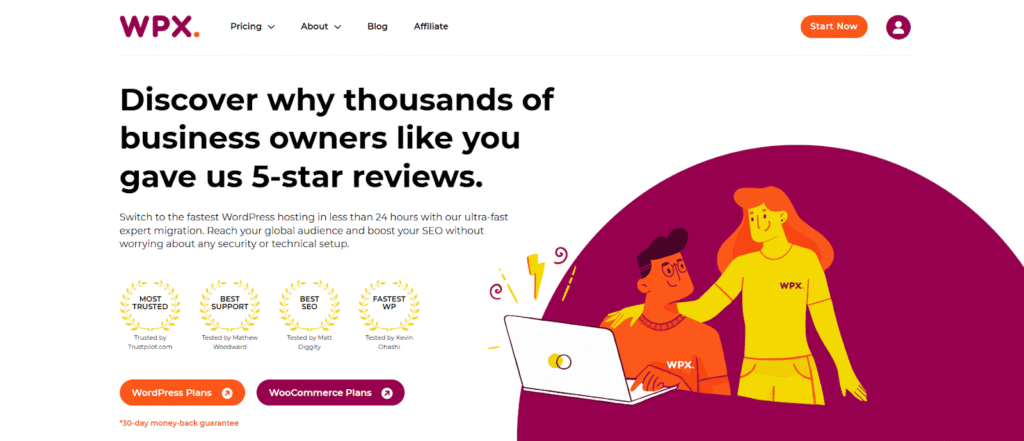
WPX Hosting is often regarded as one of the best web hostings for developers that care about speed, security, and ease of use. WPX is a fully managed hosting service that is built on LiteSpeed servers, with its own XDN CDN technology to back it up. This offers incredibly fast load times and reliable uptime for high-traffic projects.
For developers, WPX offers all of the tools you may need to streamline your workflow: staging environments for safely testing new updates, SSH and SFTP access for more control, Git support for deployment, and easy multi-user access to improve the workflows in team projects. WPX comes with free SSL certificates, daily backups, malware scanning, and DDoS protection included on all plans.
What really makes WPX stand out is its customer support. The average response time for the live chat support feature is under 30 seconds, allowing developers to resolve technical issues before expensive downtime occurs.
Also, WPX will be a great option for both client projects and scaling your own applications because it balances performance, developer-friendly features, and premium support. WPX allows you to focus on writing code, not managing servers.
Pro Tip: Use WPX’s multi-user access to segment developer, designer, and client roles, to maintain organized workflows and increase collaboration within the team.
2. Render
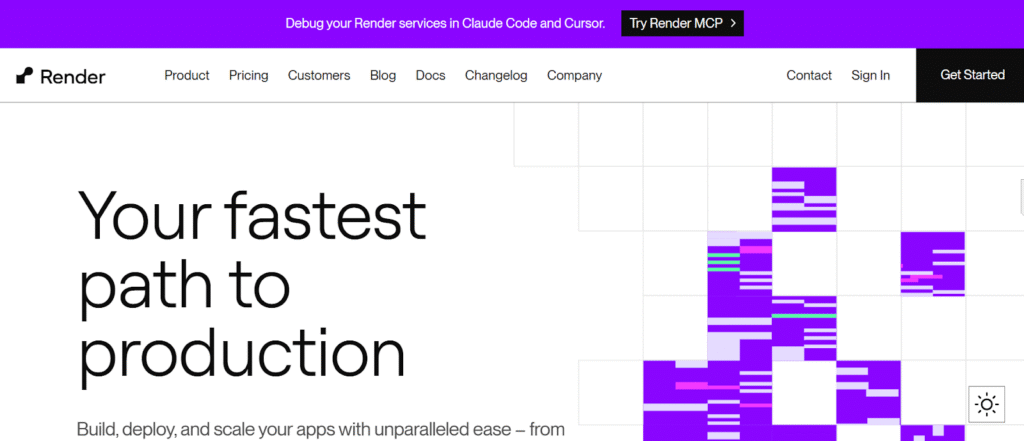
Render counts among the most developer-friendly hosting services available today and offers a complete set of tools for developing and deploying modern applications. Unlike traditional web hosting alternatives, Render merges the tactics of a PaaS (Platform-as-a-Service) with the capabilities of cloud infrastructure.
Developers can deploy applications straight from Git repositories, use auto-deploy on every push, and manage all services (like databases, background workers, and static sites) in one place.
Some of the best features include free SSL certificates, global CDN, private networking, cron jobs, and DDoS protection, which makes it simple to build applications that are secure and can scale. Render supports Docker containers, which gives developers even more flexibility when using customized environments.
Transparent pricing with automatic scale makes it a compelling choice for developers who want to focus on writing code and not managing servers.
3. Vercel
Source: Render
Vercel is a contemporary cloud hosting service designed for developers who need to build, deploy, and scale web apps with minimal hassle.
Vercel is highly regarded for frameworks like Next.js, React, Vue, and Angular because of its deep integrations with each framework. Automatic Git deployments from GitHub, GitLab, or Bitbucket mean developers can push code and get their changes live in seconds.
What distinguishes Vercel is its serverless platform integrated with a global edge network to ensure that applications respond incredibly fast for users worldwide, in all geographies. It also has real-time previews for collaboration and reviewing changes before going live.
4. Netlify

Source: Netlify
Netlify is an impressive hosting and automation platform that helps you develop your web apps faster and more efficiently. It is exceptionally suited to Jamstack projects due to its seamless integration with frameworks like React, Vue, Next.js, and Angular.
Developers can easily deploy directly from Git repos and automatically build and deploy seamlessly on every code push. All in all, this simplifies the workflow with continuous integration and continuous deployment.
Netlify’s compelling strength is its global edge network, providing impressive low-latency performance to users anywhere in the world. It provides serverless functions, form handling, and APIs to extend functionality without requiring the management of a traditional backend server.
Security features like free SSL certificates, DDoS protection, and automated updates help you secure your application while reducing management intensity.
5. AWS Amplify
Source: AWS Amplify
AWS Amplify is a well-equipped hosting service powered by Amazon Web Services that allows developers to quickly build, deploy, and scale full-stack apps. AWS Amplify supports popular front-end frameworks such as React, Angular, Vue, and Next.js, along with backend features like authentication, APIs, and databases.
Once developers have their applications up and running, they can also create continuous integration and continuous delivery (CI/CD) pipelines that will connect to GitHub, GitLab, and Bitbucket and automatically push changes even while users are building and testing applications.
A large benefit of using Amplify is that it integrates within the AWS ecosystem, providing developers a full enterprise-grade infrastructure, scale, and security to support their application at a cost of only what they need.
Applications run on Amplify Hosting, then utilize AWS’s global content delivery network (CDN), allowing users to experience low-latency applications anywhere on the planet.
6. Heroku
Source: Heroku
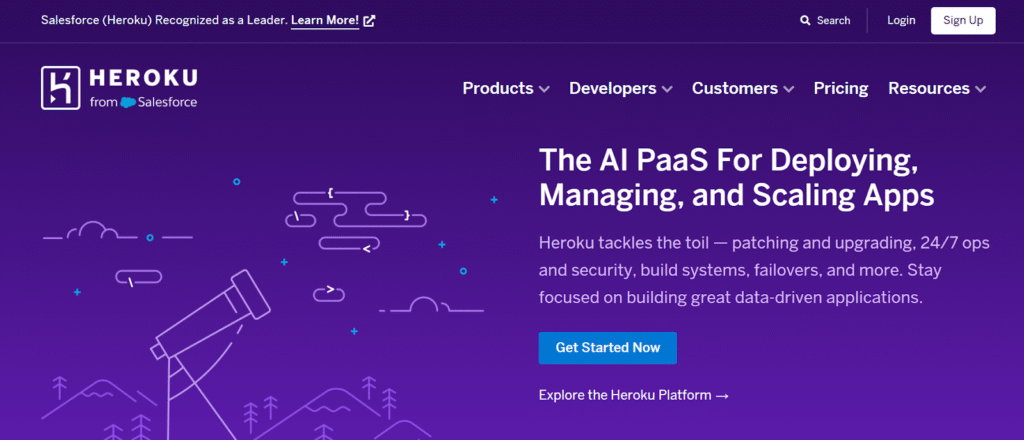
Heroku is a cloud platform aimed at developers that makes it easy to build, run, and scale applications. Heroku allows for simple deployments and is regarded as a user-friendly platform.
It also supports multiple programming languages, such as Node.js, Python, Ruby, Java, PHP, and Go, which allows developers to utilize a stable product across a variety of tech stacks.
Heroku uses Git, allowing developers to push code for deployment easily. This enables developers to take an idea into production in three steps or fewer. It also provides for the use of add-ons and extensions, and there is a huge marketplace with options in a variety of topics (from databases to monitoring to caching).
Heroku is built as a wrapper for Amazon Web Services, allowing customers to focus on their code without worrying about cloud infrastructure, ensuring worry-free reliability.
7. DigitalOcean
One aspect of DigitalOcean that is oftentimes cited by its users is its simplicity, affordability, and powerful platform. They offer cloud solutions at scale, such as droplets, which are virtual machines, k8s clusters, App Platform, which is a PaaS offering, and a managed database.
This makes DigitalOcean a good option regardless of project size, whether that be small projects or enterprise applications. Developers appreciate DigitalOcean’s simple interface, its transparent pricing model, and documentation that help to deploy applications without hassle.
DigitalOcean App Platform allows developers to deploy code directly from GitHub or GitLab. Automatic scaling, HTTPS, and zero-downtime deployments are also offered. DigitalOcean has data centers worldwide, ensuring fast performance regardless of the geographical location. APIs and CLI tools are available as well for automating deployments in DigitalOcean.
8. Hetzner
Source: Hetzner
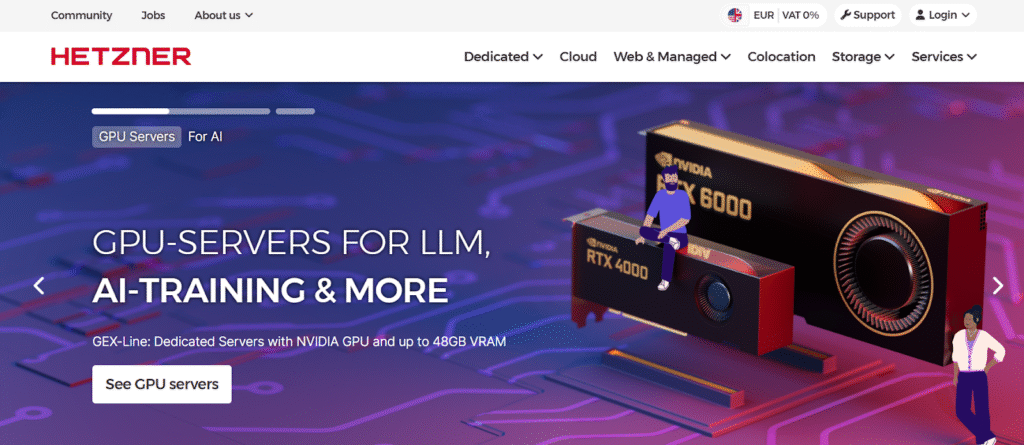
Hetzner is a Europe-based hosting company that is popular among developers for its high-performance servers, budget-friendly pricing, and robust infrastructure. They offer a range of services, including dedicated servers, cloud hosting, Kubernetes management, and storage options, catering to every type of project.
Hetzner’s transparent pricing model and enterprise-level hardware are significant advantages for developers, delivering stellar performance at a price they can afford.
Hetzner’s platform features the powerful Hetzner Cloud Console and REST API, enabling quick and easy deployment and management of infrastructure. They have data centers located in Germany and Finland, offering strong connectivity, security standards, and European data protection compliance.
9. Kinsta
Source: Kinsta
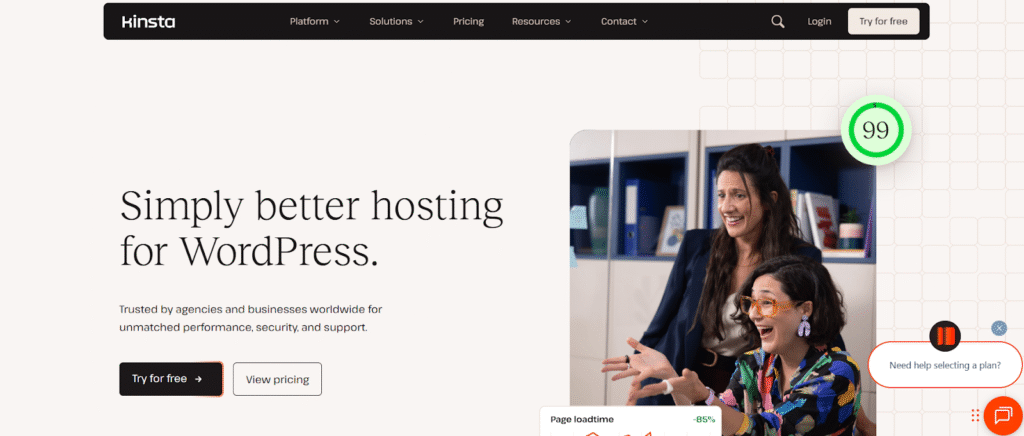
Kinsta is a premium hosting service, backed by Google Cloud Platform (GCP), developed for optimal performance, security, and scaling for developers. Kinsta is different from traditional hosting companies in that it uses the Google C2 machines and data center locations around the world, so you can trust load times will be incredibly fast and enterprise-level.
This advanced infrastructure and developer-focused tools make it one of the best options available for building and scaling complex applications.
Developers will appreciate tools such as SSH access, the WP-CLI, Git integration, and staging environments for improved productivity. Kinsta also has custom dashboards that consolidate application management while providing rich analytics and monitoring features.
The automatic scaling, daily backups, and enterprise standards of protection behind Kinsta are perfect for any developer searching for a hosting service that is fast, flexible, and secure.
Expert Opinion: Caitlin Greyling
It only supports WordPress, its professional support team is more readily available (responses in under one minute), and performance is even better thanks to its partnership with Google Cloud’s Premier Tier network.
10. ScalaHosting
Source: ScalaHosting
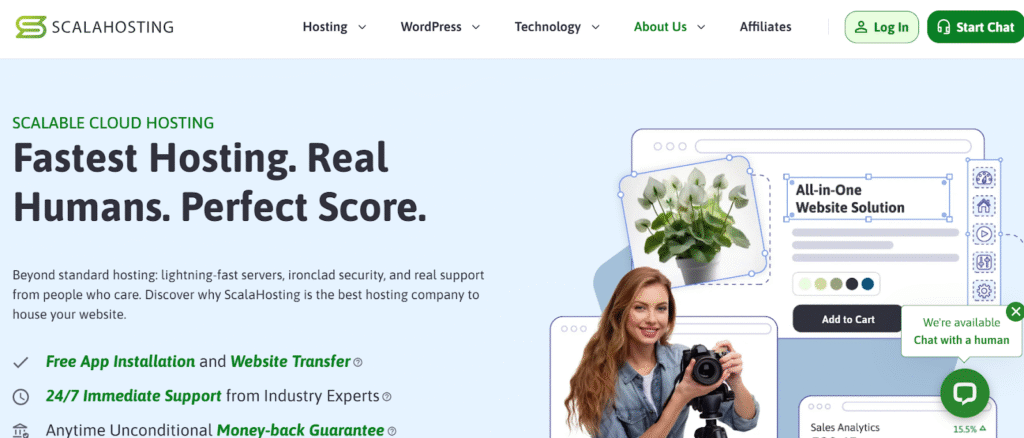
ScalaHosting is a scalable hosting company that is gaining traction due to its developer-focused VPS options, low prices, and is well known for its security features. It offers the futuristic SPanel control panel (the alternative to cPanel solutions), providing developers more control over the project while saving on licensing fees to the order of 100%.
ScalaHosting has a variety of services available, such as shared hosting, managed VPS, cloud hosting, and email hosting, making it a lower cost, suitable for both individual developers and larger, scalable businesses.
ScalaHosting has full root access for the developer, private resources, configurable options to maximize customization, and server performance goes with Git or keep deployment simple. Their managed VPS has the capacity for automatic backups, free SSL certificates, and the use of SShield AI real-time protection.
Conclusion
In 2025, web hosting is no longer just about keeping a website online. It is about providing the performance, scalability, and security necessary to build next-generation web applications.
The best hosting options offer advanced features, such as Git integration, staging environments, SSH access, and a global edge network, which are essential for helping developers streamline workflows and accelerate time-to-market.
Selecting a reliable hosting provider enables performance optimization, facilitates enhanced collaboration, and provides peace of mind that your web application is built for the future. By focusing on the foundation that encourages innovation and reliability, developers spend less time managing servers and far more time creating great code.
Frequently Asked Questions
Have another question?
A developer-friendly hosting provider will offer Git integration, staging sites, SSH access, and scalability to make development easy and even possible.
Yes, a shared environment can be leveraged for smaller projects. Still, the majority of developers will require access to either VPS, Cloud, or PaaS hosting to achieve higher performance, greater flexibility, and more control.
Git integration enables developers to deploy directly from repositories and automate updates, while still maintaining version control.
Staging provides developers an avenue to try new updates and features without impacting a live site, thereby reducing errors and downtime.
Cloud hosting and PaaS hosting are your best options for scaling. Traffic spikes are automatically managed, and scaling becomes seamless when demand increases.