Scaling an agency is not just about signing up more clients. It is about building a business that can grow smoothly, without things falling apart. The main difference between growth and scaling comes down to efficiency. When you grow, your revenue goes up, but so do your costs. More clients usually mean more work, more staff, and more time spent managing everything.
Scaling is different. Here, you increase revenue by improving your systems and making your business more profitable. The goal is to set up repeatable processes, create a steady income, and build a team that can run things without you having to step in all the time.
In this guide, we’ll walk you through a step-by-step process to scale your agency sustainably. The aim is to help your agency grow in a steady, profitable way, without burning out or letting quality slip.
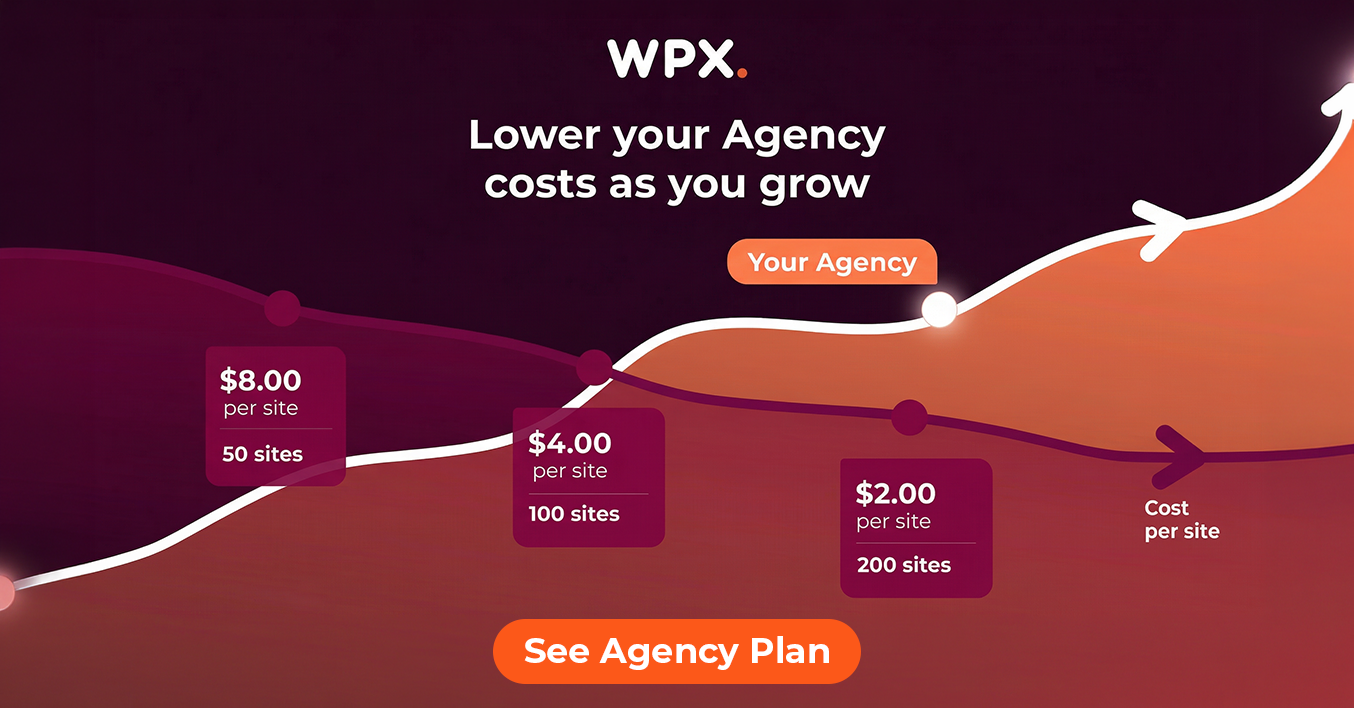
If you’re serious about scaling, start with your infrastructure. WPX Agency Plan is built for agencies managing multiple client sites – one dashboard, one invoice, bulletproof hosting at just $2 per site per month. The kind of backend efficiency that lets you take on more clients without burning out your team.
How to Scale Your Agency Step By Step

Step 1: Define Your Niche and Market
Clear positioning tells your team who your customers are and what matters to them. This makes it easier to focus on the right projects and avoid wasting time on leads that are unlikely to convert.
Besides, customers are more likely to trust your brand when your message matches their needs. As a result, you spend less time competing on price and can charge higher margins.
>>> Read more:47 Great Random Business Ideas to Start

Step 2: Set Clear Goals
Set goals that are specific and actionable. For instance, aim to bring in a set number of new clients or hit a monthly revenue target by a certain date. These goals should be tied to key performance indicators such as revenue growth, client acquisition rate, retention, and profit margins.
Break your yearly targets into quarterly milestones. This helps you stay accountable and see what’s working and what needs to change.

Step 3: Standardize and Package Your Services
To scale your agency, review your past projects and collect client feedback. Identify areas where things could have gone better. This will help you improve your service to deliver a consistent, high-quality experience.
Productize your service. Instead of starting from scratch with each client, turn your most popular services into clear, structured packages. Define exactly what’s included and what it costs.
For instance, rather than offering a general ‘marketing service,’ you could offer a 90-day growth package that covers audits, strategy, execution, and reporting. This makes it easier for clients to see what they’re getting, speeds up the sales process, and helps you create more predictable revenue.

Step 4: Build Scalable Systems and Operations
Document all your main workflows. This typically includes client onboarding, project delivery, communication protocols, and invoicing. Use structured Standard Operating Procedures (SOPs) stored in centralized tools like Google Docs or Notion so your team can easily access and follow them. Doing this helps your agency run smoothly without everything depending on you.
Plan out how you assign work, so everyone has a fair workload and projects stay on track. Hiring specialized roles, like an operations manager, early on can make your agency run more efficiently as you grow.
Check your processes regularly to ensure they continue to work as your agency grows.

Step 5: Implement Tools and Automation
Identify and automate your most time-consuming, repetitive workflows. These may include client onboarding emails, invoice reminders, and internal notifications. Automation allows your agency to scale efficiently without proportionally increasing headcount.
Don’t try to use every tool out there. Instead, pick a few tools that cover most of your repetitive work. The goal is to build a streamlined, integrated tech stack that connects your core functions – customer relationship management, task tracking, invoicing, reporting, and others.
AI is now one of the most powerful tools for automating repetitive business tasks. AI adoption is rising – 88% of organizations now use it in at least one business function.
With the right setup, one team member can manage more clients by automating tasks such as content creation, reporting, and customer support.
Track performance using key metrics like time saved per task. Once your team is comfortable, you can start adding more advanced automations.
Handle More Traffic with WPX Hosting

Step 6: Build Predictable Revenue Streams
If you want to grow your agency sustainably, it’s important to move away from unpredictable project work and focus on building steady, recurring revenue. This approach helps you maintain stable cash flow and provides a solid foundation for long-term growth.
When you depend on one-off projects, you end up in a feast-or-famine cycle. Revenue fluctuates as clients’ budgets change, forcing your team to constantly pitch, sell, and rebuild the pipeline.
Shifting to recurring revenue, through retainers, subscriptions, or multi-year contracts, transforms how your agency operates. With a predictable monthly income, you can forecast revenue, hire proactively, and invest in better tools and talent.

Step 7: Build a Strong Team Without Over-Hiring
Scaling an agency is not just about hiring more people. Instead, it means building a lean, effective team that can that maximizes output while minimizing unnecessary overhead.
Hiring too quickly can do more harm than good. If you have more staff than you need, your fixed costs go up, especially during slower periods when workloads drop. This can leave you with teams that are not fully used, where employees may only be productive 60–70% of the time.
A good way to scale is to combine a small, core in-house team with flexible external talent. Keep strategic functions, like client management, planning, and high-level execution, in-house. For execution-heavy work, bring in contractors or remote specialists. This lets you handle busy periods without worrying about layoffs or about staff having nothing to do during slower periods.

Step 8: “Fire Yourself” from Daily Operations
Step back from being the main decision-maker. A business becomes truly scalable when it can run smoothly without you needing to be involved in every detail. This lets you focus on bigger-picture work like strategy and growth, or even take time away if needed.
In the early stages, it makes sense for founders to be deeply involved in every aspect of the business – sales, client relationships, approvals, and delivery. But as your agency grows, staying involved in every area will start to hold things back.
If every decision and approval has to go through you, projects slow down. Teams end up waiting for your input, and clients may notice delays or inconsistent results.
To build an agency that runs on its own, focus on replacing your involvement with clear systems and defined responsibilities. Begin by documenting decision-making frameworks, setting limits on what requires your approval (for example, let teams handle anything under $1,000), and creating standard operating procedures. This way, your team can make consistent choices without always needing to check with you.
In addition, assign clear ownership across the business: operations, client delivery, sales, and growth. Each area should have a dedicated leader responsible for outcomes, supported by defined KPIs.
Your hosting should work the same way – without you. WPX Agency Plan gives your team one place to manage every client site, with a single login, a single invoice, and expert WordPress support just 28 seconds away on average. You don’t need to be available 24/7. We are.

Step 9: Strengthen Your Brand and Customer Experience
If you have a strong market position and great client relationships, you’ll get more referrals, keep clients for longer, and won’t have to rely so much on outbound sales.
Long-term growth isn’t just about getting new clients. It’s about keeping the ones you have and helping them grow with you. To do this, focus on giving your clients a great experience at every stage. Here are some ways to do that:
- Follow up after project completion to maintain relationships
- Collect feedback and visibly implement improvements
- Offer loyalty perks such as exclusive webinars, insights, or priority support
A great experience keeps them coming back and encourages them to spread the word for you.
You can also build a sense of community among your clients. For example, you might try client-only events, roundtables, or private groups or networks where clients can share insights.
>>> Read more:How to Find Clients for a Digital Marketing Agency
Key Considerations Before You Scale Your Agency
Signs Your Agency is Ready to Scale
- Consistently overwhelmed workload: If you and your team are working at full capacity every week, and there is little room to take on new clients without causing stress or delays, this is a sign that demand is higher than your current resources can handle.
- Steady flow of qualified leads: If you are seeing a reliable, ongoing increase in high-quality leads, rather than just occasional spikes, it indicates consistent demand likely to continue.
- Systems starting to break down: Your current processes or workflows are struggling to keep up, and you may notice more missed deadlines or communication gaps.
- Missed growth opportunities: You are turning down projects or are unable to upsell existing clients because of limited capacity.
- Expansion aligns with long-term goals: If your growth goals, such as reaching higher revenue targets or expanding your services, require a larger, more capable operation, this is a sign you are ready to scale.
Signs You are NOT Ready to Scale Yet
- Your service delivery is inconsistent or error-prone
- Processes rely heavily on the founder
- Revenue is unpredictable or unstable
- You don’t have a clear positioning or target audience
Are Your Systems and Capacity Built for Increased Demand?
Moodle’s report found that about two-thirds of employees experience some level of burnout, largely driven by several key factors: 24% of workers feel they have more tasks to complete than time to complete them, while an equal percentage say they lack the necessary resources or tools to perform their jobs effectively.
Before you take on more clients, make sure your agency is ready. You need to ensure your agency can handle more clients without compromising quality or burning out your team. Here are a few questions to help you figure out if you’re prepared:
- Do you have documented workflows for delivery?
- If your workload doubled, could your team keep up without burning out?
- Do you already have the right tools and systems to help your team work efficiently?
- Is your onboarding process scalable?
- Will your current setup work if you suddenly have a lot more clients?
Are You Building for Steady, Healthy growth, or just Trying to Grow as Fast as Possible?
Not all growth is a good thing. Some agencies rush to add more clients and end up with more stress, higher costs, and a messier process. The goal should be to grow in a way that actually makes things easier and more rewarding for your team and your clients.
Conclusion
The process in the above guide gives you the structure you need to grow without sacrificing your health, relationships, or the quality your agency is known for. You can reach seven figures and beyond, but only if you build the right systems in place before you try to scale.
If your website is slowing you down, switching to WPX Hosting is a practical next step. As your agency scales, your hosting should scale with you.
Switch to WPX Hosting for Agencies
Frequently Asked Questions
Have another question?
Most agencies struggle due to a lack of specialization, reliance on the founder too much, and unstructured processes. Without systems and a clear niche, growth is not effective, causing burnout and limiting expansion.
You should start hiring if you’re handling too many day-to-day tasks, such as managing projects, replying to clients, fixing issues, and no longer have time to focus on strategy or growth.
Automation reduces manual, repetitive tasks, allowing agencies to handle more work without increasing headcount. It makes your processes more efficient, reduces mistakes, and keeps your workflows consistent.
Set clear goals and track key metrics such as client retention. Break your plan into phases and review progress every quarter to spot and fix plateaus. This helps you deliver consistently, speed up your sales cycle, and lets your team handle more clients without losing quality or cutting into your margins.