Many digital marketing agencies do not struggle because they lack the ability to deliver results for clients. The real challenge is generating a steady flow of qualified leads for their own business.
In this guide, you’ll learn practical strategies to find clients for your digital marketing agency. Expect actionable methods you can use effectively and build a more reliable pipeline over time.
Before You Start: Build a Foundation That Attracts the Right Clients
Large, established agencies already have an edge because they can offer full-service packages, lower pricing at scale, or an extensive range of services. This makes it difficult for smaller or newer agencies to stand out. If you’re building a digital marketing agency, figure out exactly who you serve and what makes your agency different.
Define Your Ideal Customer Profile (ICP)
Your Ideal Customer Profile is a detailed description of the specific clients that is most likely most likely to benefit from and buy your services. A clearly defined ICP not only improves ROI but also increases operational efficiency across your entire pipeline.
Start by identifying your best existing customers. These are the clients you want more of. Organize your findings into key categories:
- Firmographics: Industries, company sizes, revenue ranges or growth phase, geographic focus
- Technographics: Tools and platforms your ideal clients already use (Shopify/WordPress, Google Ads, CRM, etc.)
- Behaviors: How these companies operate and make decisions (active on LinkedIn, attends industry events, etc.)
- Common Challenges/Pain Points (struggle with lead quality, inconsistent ROI, etc.)
Avoid overly broad categories. Narrowing your ICP allows you to tailor your messaging to a specific level of maturity and need. You should also consider market trends. Identify industries that are growing or underserved, and evaluate where your agency’s expertise can fill a gap better than competitors.
The importance of knowing your target audience | WPX Academy
Clarify Your Niche
In a saturated market, specialization is what creates differentiation. If you want to build a scalable and profitable digital marketing agency, clarifying your niche is one of the most important steps.
- Evaluate your agency’s strengths. Look at your team’s skills, past client successes, and areas where you consistently deliver strong results. At the same time, consider what industries or types of projects you naturally enjoy working on. The goal is to identify overlap. For example, if your agency has strong PPC expertise and experience working with e-commerce brands, that intersection could point toward a high-potential niche.
- Not every interest or past success should become your niche. Narrow your list down to a few potential options and assess them based on long-term potential, market demand and size, marketing spend and willingness to invest, level of competition, and opportunities to differentiate.
- Test and validate your niche. You can run targeted outreach campaigns, build a landing page for your niche-specific offer, offer pilot projects or audits, or collect feedback through surveys or discovery calls. Pay attention to how prospects respond and use these insights to refine your messaging, services, and positioning.
- Once your niche is clear, refine your service offerings to align with it. Instead of offering everything, focus on a few core services that directly address your niche’s biggest pain points. For example, SEO for SaaS companies, paid social for e-commerce brands, and more. Continue refining over time. Markets evolve, and so should your positioning.
Create a Clear Unique Selling Proposition
Your USP is what sets your agency apart. It clearly communicates why clients should choose you.
- To develop your USP, define the core function of your service, but through the lens of value. Ask: Why do clients need this service? What specific outcomes do they expect? What problems are they trying to solve? Focus on benefits such as increasing qualified leads, improving ROI on paid ads, and more. And then compare your answers with competitors. Your goal is to highlight differences in outcomes, approach, or specialization.
- Focus on how your agency uniquely solves client problems. For example, you can highlight data-driven or AI-powered strategies, industry-specific expertise, or proven results backed by case studies.
- Test and refine your USP. Validate it by testing different versions on your website or landing pages, using it in outreach and sales conversations, gathering feedback, and tracking engagement and conversion rates.
- Once validated, integrate your USP across all touchpoints: the website homepage and headlines, sales decks and proposals, and the LinkedIn profile and content.
Have a Website
Your website is essential for any digital marketing effort. All campaigns, whether through ads, email, or social media, ultimately drive traffic back to your site.
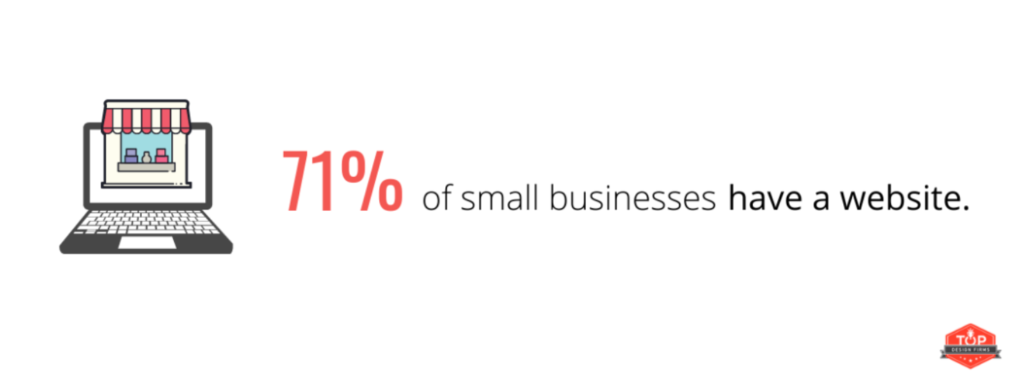
Have a website to build your online presence (Image source: Clutch)
A website helps you establish credibility, communicate your brand, and attract the right clients. The phrase “digital marketing agency” receives up to over 200,000 global searches per month, based on Semrush data. Potential clients often research agencies online before making decisions, and a professional site that highlights your portfolio, case studies, and client testimonials signals trust and expertise.
With optimized content and strategic lead-capture forms, you can filter for businesses that align with your niche and value your expertise. Educational resources like blogs and guides further nurture these prospects, positioning your agency as a trusted authority.
When potential clients discover your agency online and want to learn more, your website provides a clear path for them to get in touch. With the right structure, such as contact forms and service pages, you can convert interest into real business opportunities.
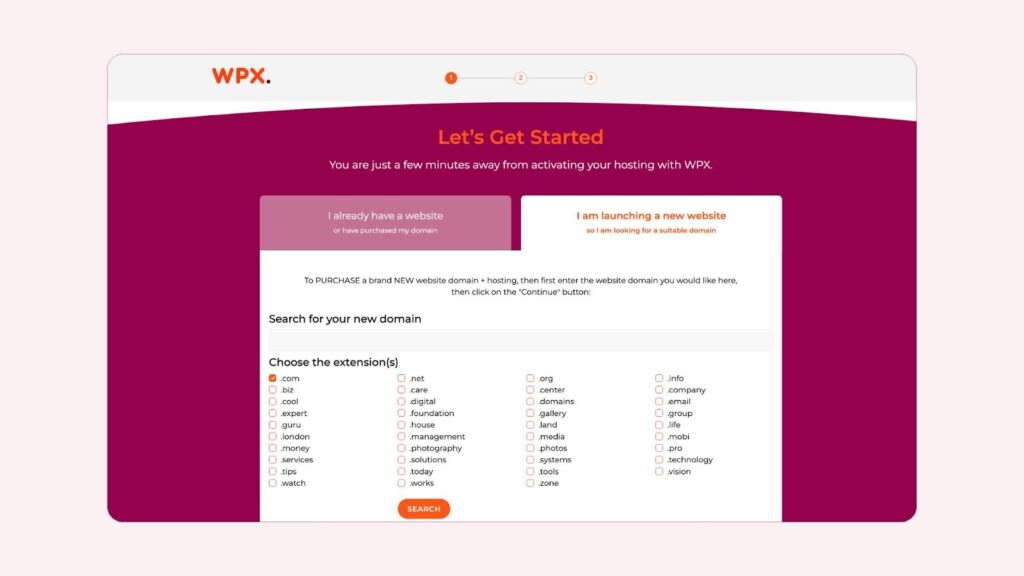
If you don’t have a website yet, now is the time to build one with a reliable hosting solution from the start. If you already have a website, consider optimizing its performance and improving user experience.
Build Your Agency Website Today
10 Proven Ways to Find Clients for a Digital Marketing Agency
The following methods represent acquisition approaches agencies use successfully to generate qualified prospects. Choose strategies that align with your agency’s strengths, available resources, and your target clients’ characteristics.
Before you land more clients, make sure you can deliver for the ones you have. WPX Agency Plan gives you enterprise-grade infrastructure, security, and management tools across your entire client portfolio – one dashboard, one login, starting at just $2 per site per month. The operational backbone that serious agencies rely on.
1. Personalized Cold Email Outreach
Most people get too many generic emails. If your message shows you understand their business and what they care about, it stands out. That’s why personalized emails are more likely to be opened and answered – they signal that your message is worth their time.
Effective personalization starts long before you write the email. It begins when you’re choosing who to contact. If you’re collecting contacts without meaningful context, such as industry, growth stage, or pain points, your outreach will inevitably feel generic. Strong personalization requires strong data. The more relevant your insights, the more compelling your message becomes.
At the same time, there’s a fine line between thoughtful personalization and overdoing it. In business emails, it’s better to focus on what matters to the recipient, not just on adding more irrelevant personal information.
>>> Read more: How to Find Someone’s Email Address
2. High-Intent LinkedIn Outreach
LinkedIn is a professional platform. Most people go to LinkedIn to network, find business opportunities, or explore solutions. As a result, they’re more open to relevant outreach.
On LinkedIn, you can target decision-makers who fit your ideal customer profile by role, industry, company size, or growth stage. This means you’re not just reaching more people – you’re reaching the right people.
But success depends on your approach. If you just send connection requests or generic messages, you won’t get far. Like with email, relevance is key. Your message should show you understand the prospect’s business and clearly explain how you can help them achieve a specific goal.
It’s also worth thinking about LinkedIn as more than just an outbound channel. By sharing useful content and engaging with others, you build your reputation and make your outreach more effective. If someone has seen your name or your posts before, your messages will feel more familiar and credible.
3. Run Targeted PPC Ads
Running targeted PPC ads is one of the most direct ways to attract high-intent clients. The main benefit of PPC is that it puts your business in front of people who are actively searching for services like yours.
With tools like Google Ads, you can control exactly who sees your ads – by keyword, location, and even by behavior. Running PPC campaigns for your own agency is also a great way to show potential clients that you know what you’re doing. If you can get results for yourself, it’s a strong signal that you can do the same for them.
PPC can be cost-effective, but it can also become expensive if not managed carefully. The good news is you can track everything – cost per click, conversion rates, and return on ad spend. But you do need to keep a close eye on your campaigns. Otherwise, you might end up paying for clicks that never turn into real clients.
4. Publish Social Proof
People trust real experiences more than what a business says about itself. When prospects see that you’ve helped companies similar to theirs achieve measurable results, they feel more confident about working with you and see less risk.
Another key advantage is qualification. When your case studies and testimonials reflect a specific niche, industry, or problem, prospects who match that profile are more likely to engage.
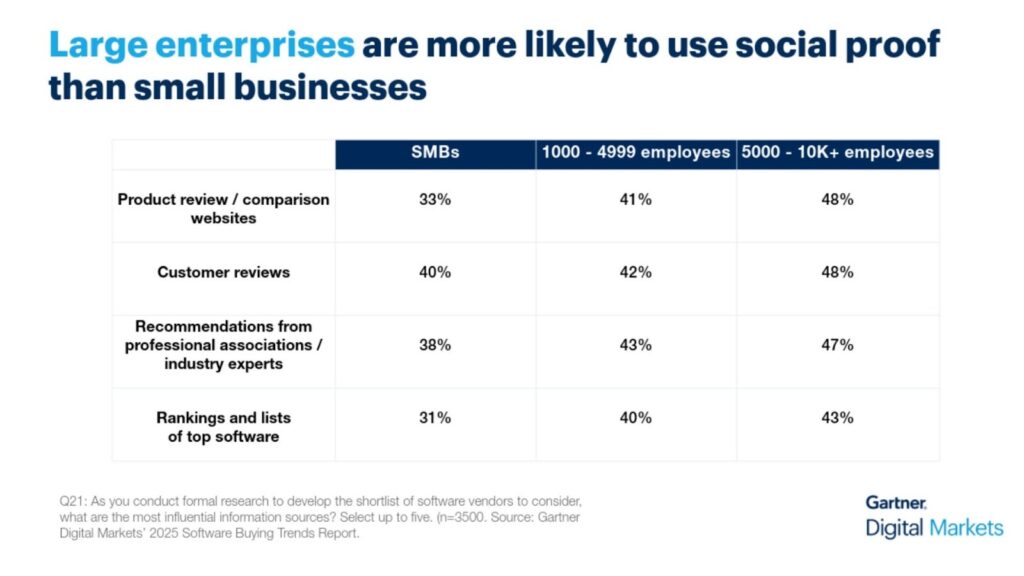
Social proof influences decision-makers (Image source: Gartner)
Social proof should play a critical role across your entire funnel, from your website and landing pages to outreach and proposals. When consistently visible, it reinforces your authority at every touchpoint.
5. Join Slack Groups & Online Communities
With online communities, you can join ongoing conversations where prospects talk about their challenges, needs, and goals as they happen. This approach changes the dynamic from cold outreach to warm engagement. Rather than pitching to people you do not know, you take part in discussions and build trust over time.
By showing up regularly and sharing useful advice, your agency becomes known as a helpful resource. When someone in the group needs services, they are more likely to reach out to someone who has already been helpful. Being active in communities can also lead to valuable referrals.
6. Build Authority Through Content Marketing
Trust is the main reason this approach works. If your content regularly helps people learn, solve problems, or get useful insights, whether on your website, blog, or other digital channels, it positions your agency as a credible authority.
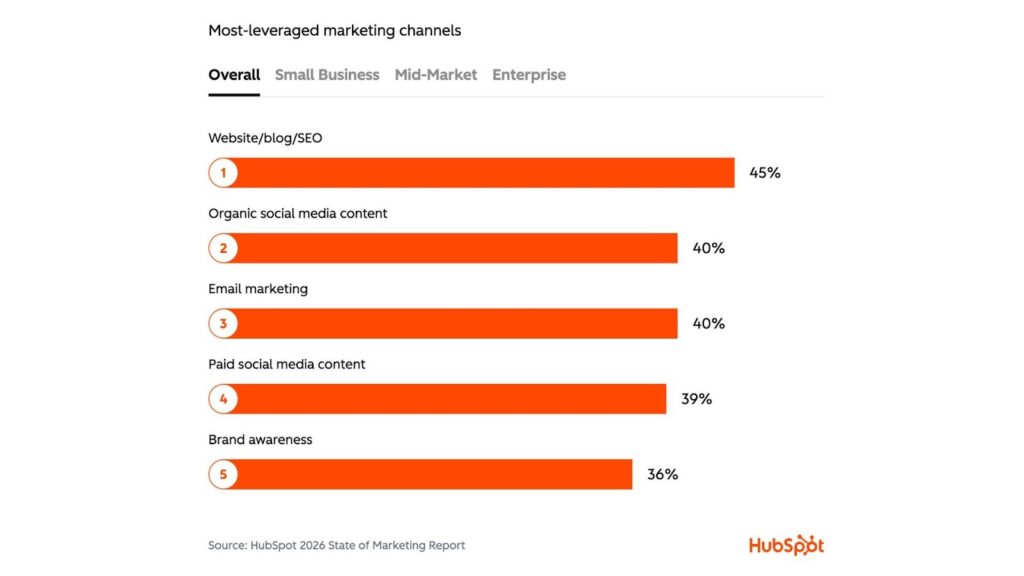
The most effective marketing channels are websites and blogs (Image source: HubSpot)
Good content keeps working for you over time. Once published, it can drive traffic, engagement, and leads for months or even years. This makes content marketing a reliable and cost-effective way to grow your agency.
7. Guest Posting & External Publishing
The core value of this strategy is authority. When your content appears on respected industry blogs or niche publications, it signals that your expertise has been validated externally.
These platforms also come with their own audiences. If you publish in the right places, you reach readers who fit your target customer and who are already paying attention to industry news.
Guest posting and external publishing allow your agency to borrow trust from established platforms. However, effectiveness depends on relevance and selectivity. The site’s audience needs to match your target market, or your efforts won’t pay off
8. Strategic Partnerships
When a trusted partner, such as a web developer or PR firm, recommends your agency, you’re no longer starting from zero credibility. The prospect already has confidence in the referral source, so they are less skeptical and can make decisions faster.
Effective partners work with the same types of clients as you do, but offer different services. When their clients need help with something outside their area of expertise, such as SEO, paid ads, or lead generation, they can refer them to you. This means the leads you get are both warm and a good fit for what you offer.
Partnerships also improve efficiency in client acquisition. Unlike outbound methods that take a lot of time, partner referrals are usually pre-qualified. These prospects already know what they need, have a budget, and are ready to move forward. This helps lower your cost to acquire clients and saves time by avoiding unqualified leads.
9. Attend Trade Shows & Networking Events
Events naturally attract professionals who are actively engaged in their industry. This means you’re engaging with individuals who are more likely to have both the need and the authority to hire your agency.
Whether through conversations, presentations, or informal discussions, you have the opportunity to demonstrate your expertise in real time.
It’s also worth remembering that building relationships takes time. While some opportunities may arise immediately, many connections require follow-up and nurturing.
Beyond immediate lead generation, events provide valuable market insight. Conversations, panels, and discussions reveal emerging trends, common pain points, and shifts in buyer behavior.
10. Build a Retention System
Retaining and expanding existing accounts is usually more cost-effective than constantly acquiring new ones. As client relationships deepen, opportunities for upsells and cross-sells increase.
Satisfied clients who achieve meaningful results are more likely to share their experiences – whether through testimonials, referrals, or informal recommendations. This creates a compounding effect, where each successful engagement contributes to future opportunities.
However, retention takes ongoing effort. You need to deliver results, maintain clear communication, set expectations, and continuously demonstrate value.
The Hard Truths About Finding Clients for a Digital Marketing Agency
The market is competitive, and many potential clients have had disappointing experiences in the past. Results take time, rejection is constant, and inconsistent effort kills momentum faster than anything else.
You Don’t Have a Lead Problem – You Have a Positioning Problem
Many agencies strongly believe that the answer to getting more clients is increased outreach, larger advertising budgets, or new prospecting tools. But sometimes, the real issue is positioning.
If you describe yourself as a full-service digital marketing agency for SMBs, you’re indistinguishable from thousands of competitors making identical claims.
Without a clear ideal customer profile or a unique selling point, prospects have no reason to pick you over cheaper alternatives. This kind of generic positioning usually guarantees you’ll compete primarily on price rather than expertise.
Your Outreach Fails Because It Sounds the Same
Most decision-makers get dozens of similar agency pitches every week. Messages like “We help businesses grow with proven digital marketing strategies” or “Let us boost your online presence and drive results” all sound the same.
What stands out is outreach that mentions an actual business problem. For example: “I noticed your competitor ranks for ‘best web hosting services’ while your site doesn’t appear until page 3.” This shows you’ve invested time in understanding their situation and can articulate specific opportunities for improvement.
Getting Clients Is Easier Than Getting Good Clients
In fact, there are a lot of clients with small budgets who expect quick results and take up more time than they are worth. When their expectations are not met, they usually leave, consuming valuable capacity that could be better allocated to more profitable accounts.
Clients with $500 budgets expecting $5,000 results are almost guaranteed to become dissatisfied. This often leads to negative reviews, refund requests, and potential damage to your agency’s credibility.
Trust Is the Real Bottleneck
Business owners approach agency conversations with justified skepticism – they’ve paid previous agencies thousands for vague “SEO optimization” or “social media management” that produced little or no measurable revenue impact.
To earn trust, agencies need to be specific about what they offer, explain their processes clearly, and show real results with data. Regular communication, honest reporting (even if results are slow), and a focus on actual business outcomes are all important for building reliability.
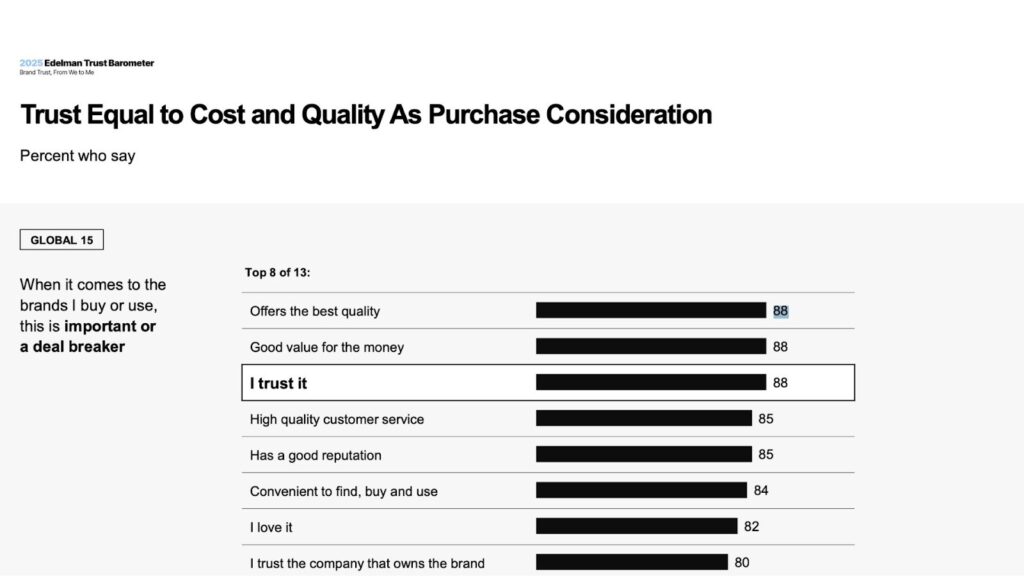
Trust is a key factor in decision-making (Image source: Edelman)
Conclusion
Outreach, content, referrals, partnerships, and paid channels all work best when used together and applied consistently. The key to long-term results is building trust by showing up, providing value, and developing relationships over time. Focus on being consistent, measure what works, and refine your approach. Winning new clients takes time, but with a solid system and steady effort, it gets easier and more reliable.
Frequently Asked Questions
Have another question?
A lot of agencies find it hard to attract clients because they have not clearly defined their target customer. Even if they manage to close some deals, they often struggle to generate a steady stream of high-quality leads. With so many agencies offering similar services, it is difficult to stand out and attract attention.
Large, established agencies already have an edge because they can offer full-service packages, lower pricing at scale, or an extensive range of services. In a competitive market, specialization is what creates differentiation. If you want to build a scalable and profitable digital marketing agency, clarifying your niche is one of the most important steps.
You’re likely not attracting clients yet because your agency is still stuck in the research or planning phase and hasn’t fully executed client acquisition strategies. To consistently get clients, you need clear positioning, visible proof of results, and to use several marketing channels in a consistent way.