If you want to add hosting to your services, the challenge is that many clients don’t immediately see its value. The key to selling premium hosting is about helping clients understand the business outcomes. In this post, you’ll learn how to frame hosting as a valuable business investment and package your hosting services in a way that creates long-term client relationships and recurring revenue for your agency.
Start with Business Pain Points
No one wakes up feeling, “I wish I had better hosting.” What any owner really wants is to relieve the frustrations that slow down their businesses. Before you tell them about your hosting plans or pricing, find out what’s affecting their website and operations.
- Many business owners think their marketing efforts aren’t working because potential customers leave their websites without taking any action. They might notice that their site feels slow, but they often don’t realize how much poor performance hurts the customer experience and lowers conversion rates.
- No one wants their business to appear unreliable. When the website goes down, people worry that customers will lose trust and take their business elsewhere.
- For many businesses, security concerns create constant anxiety. Even if they have never experienced a cyberattack, the possibility of losing customer data or website content remains a concern. The concern is not technical. It is the fear of business disruption and reputational damage.
So, when your agency is pitching premium hosting to clients, the goal isn’t to sell hosting immediately. First, help clients identify the operational, financial, and emotional challenges their current hosting is causing. When clients clearly recognize the problems affecting their business, they become far more receptive to discussing potential solutions.
Translate Your Hosting Features into Business Benefits – How to Pitch Premium Hosting to Clients
Keep in mind that most business owners do not really evaluate hosting the same way developers do. When they hear words like caching, SSD, or latency, it just sounds complicated, not valuable.
So whenever you talk about any feature, explain what it actually means for their business. Skip the technical list and focus on the results that matter to them.
For example:
| Feature | What It Means | Business Benefit |
| High-speed SSD storage | Website files load faster. | Reduce bounce rates, improve user experience, and increase conversions and sales. |
| Managed “Fixed For You” support | Experts resolve issues on your behalf. | Spend less time troubleshooting and avoid costly developer fees for routine fixes. |
| Automated daily backups | Websites can be restored quickly after errors or failures. | Protects revenue and prevents extended downtime. |
| Managed Security & Web Application Firewall (WAF) | Malicious traffic and hacking attempts are blocked before reaching the site. | Reduces risk of security breaches and business disruption |
| Global CDN | Website content is served from locations closer to visitors. | Delivers faster experiences worldwide and supports growth into new markets. |
| 99.9% uptime guarantee | Keeps the website online consistently | Fewer lost sales and uninterrupted customer access |
In short, keep the conversation focused on what is actually valuable to your clients – the results they want to see:
- More revenue (through faster website performance)
- Less risk (through backups and security protection)
- More productivity (via managed support)
- Better customer experiences (through reliability and uptime)
- Scalability (that supports future business growth)
Demonstrate the Financial Value of Premium Hosting
“That’s too expensive.” You’ll hear this a lot when you recommend premium hosting. And your goal is not to convince clients that your hosting is cheaper. Your job is to show clients that premium hosting delivers far more value than it costs.
Most business owners naturally compare a hosting plan against what they’re currently paying, the cheapest hosting alternative, and their monthly operating budget. They may focus entirely on cost, and the more effective approach is to position your premium hosting as a business investment: it protects revenue, boosts performance, reduces risk, and saves time.
Show the cost of one incident, with specific, data-driven numbers. For instance, your pitch could sound like this:
“The average cost of a data breach is $4.4 million globally. Our premium hosting includes enterprise-grade firewalls, daily malware scanning, and automated instant backups that reduce the risk of common attacks. At $200/month, you’re investing in serious security and reliability for about $6.60/day, which is a small price compared to the potential cost of a breach.”
>>> 10 Proven Ways to Find Clients for Your Digital Marketing Agency
Use Proof & Social Proof to Explain the Benefits of Premium Hosting for Clients
When someone is considering premium hosting, they do not want to know whether it works in general, but whether it works for them. Real-world evidence helps answer that question better than any list of features or a slick sales pitch.
In fact, people tend to look to others before making a big purchase. Don’t just tell clients to trust you. Show them how other companies have already seen real, measurable results with your premium hosting.
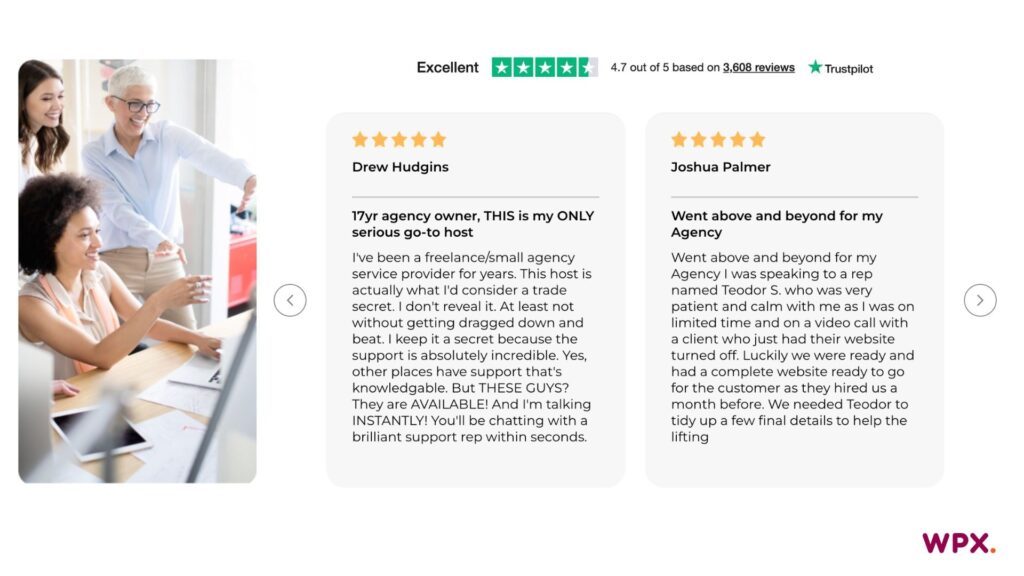
- Case studies, testimonials, and trust signals are powerful. Share stories that highlight the client’s challenge, the solution implemented, and the results, along with testimonials that address common concerns around cost, performance, and support.
- Reinforce credibility with certifications, partnerships, awards, client counts, and other trust signals.
- The more specific and data-driven your proof, the better. For example, “load times dropped from 5 seconds to 1.4 seconds, and revenue increased by 31%” is far more persuasive than a generic compliment.
Bundle Premium Hosting Into Your Service Package
You’re not selling hosting as a standalone product, but as part of your full website management package. When you bundle hosting with your other services, clients see a complete solution that covers ongoing performance, security, and website management. This positions your agency as the professional responsible for their entire online presence.
Choose a Reliable, Premium Hosting Provider:
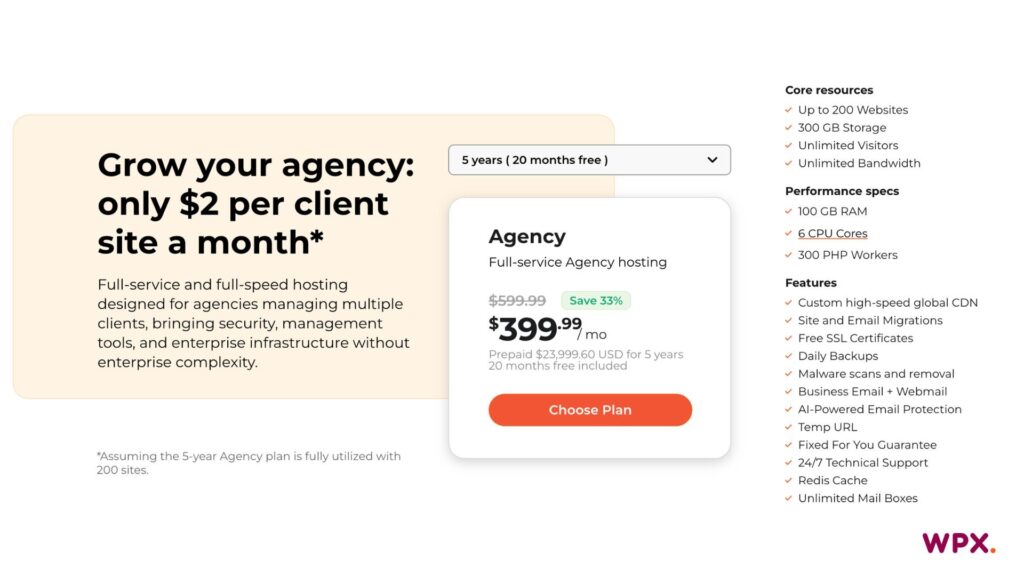
The foundation of your hosting offering is choosing a high-quality provider you can trust to host your clients’ websites. Rather than building and maintaining your own hosting infrastructure, you partner with an established hosting company that delivers reliable performance, security, and support. This allows you to confidently manage your clients’ websites without dealing with constant technical issues or server maintenance.
Create Tiered Care Plans:
For example, a basic plan might include hosting, backups, updates, and security monitoring, while premium plans can add content updates, performance optimization, priority support, and monthly reporting.
If you offer website development services, the perfect time to pitch your care plan is when the website project is completed. Tell your clients:
“Every website we build includes our website care plan for the first month. That way, your site is ensured to be properly maintained, secured, and monitored after launch. After the first month, you can continue with our all-inclusive care plan or manage everything yourself. Let me tell you that most of our clients choose to stay because they appreciate having an expert handle the technical details.”
This sets you up as a long-term partner.
How to Pitch Premium Hosting for Different Types of Clients
The truth is that clients value different things, and what drives them to buy is rarely the same. Find out what matters most to each client group, and you can tailor your pitch to make it much easier for them to say yes.
Small businesses: These are typically focused on saving time and avoiding unexpected expenses. Many small businesses and startups don’t have an in-house IT team or the technical expertise to manage website updates, security, and backup issues on their own.
When you talk to them, focus on these benefits:
- Ongoing website maintenance without needing technical knowledge
- Regular backups and security monitoring
- Fast support
- Reduced risk of website downtime
- Predictable monthly costs
Larger companies:
Larger organizations often have different priorities. They are more concerned with operational reliability, security, compliance, and the protection of their brand reputation.
For these clients, frame your care plan as a way to lower business risk and ensure website stability. Highlight these benefits:
- Enhanced website security and monitoring
- Reduced risk of downtime and revenue loss
- Faster issue detection and resolution
- Performance optimization and reliability
- Accountability through reporting and ongoing management
- Support for internal teams and stakeholders
The more closely your pitch aligns with a client’s priorities, the easier it becomes to demonstrate value.
Handle Common Premium Hosting Objections
When pitching premium hosting, expect clients to question the need for a higher monthly investment. The key is to acknowledge their concerns while redirecting the conversation toward business value and long-term ROI.
“Our Current Hosting Is Fine”
If the website is currently online, clients might think everything’s fine and that there’s no problem to solve. Ask whether their current hosting can handle traffic surges or protect them from security issues that could cost them money. What happens if their business grows and the hosting can’t keep up?
“The Premium Option Costs Too Much”
Don’t just justify the price – show what’s at stake. Downtime, slow load times, or a hacked site can mean lost sales and expensive fixes. Spending a bit more on hosting now can save thousands later by keeping the site fast, secure, and always available.
“We Don’t Need Enterprise-Level Features”
Hosting is also the foundation for protecting your business and supporting growth. Backups, security, uptime monitoring, and expert support aren’t just for large companies. They help businesses of any size reduce risk, keep customers happy, and grow without worrying about what’s under the hood.
Conclusion
Keep one principle in mind: “If you want to make money, you have to help someone else make money.” – Russell Simmons. At the end of the day, what customers truly want is a smoother experience for their customers and more opportunities to generate revenue. As an agency, your role is not to sell hosting. Your role is to provide peace of mind. When clients see that you’re committed to the performance and success of their website, hosting becomes more than a line item on an invoice. It becomes part of a trusted partnership, and that’s where the most successful client relationships are built.